Deleterious processes in concrete
The main categories of deleterious processes in concrete, by which the concrete deteriorates as the result of chemical attack, are outlined below. Each of these is a huge subject in its own right, the subject of many papers and conferences. Here we can only summarize the main characteristics and suggest sources of more detailed information.
Of course, concrete can also suffer from physical damage, for example through impact, abrasion or frost action.
It should be stressed that concrete which has been designed appropriately for the conditions in which it is used, and produced in accordance with the design, should have a very long service life. That said, sometimes problems do arise. Often, these can be traced back to poor design or workmanship.
Some of the most common causes of concrete deterioration are:
- Cracking and spalling due to corrosion of steel reinforcement
- Leaching
- Sulfate attack
- Alkali-silica reaction
- Carbonation
There are many other forms of chemical attack which can damage concrete, including oils or fats, acid, and salt solutions.
Strictly speaking, carbonation is not detrimental to concrete; in fact the compressive strength of carbonated concrete is higher than that of uncarbonated concrete. However, since carbonation can be closely associated with other causes of concrete deterioration, and involves major chemical changes in the cement paste within the affected concrete, it will be considered here too.
Usually, concrete which is affected by one of these processes will also show signs of others. To take an extreme example, consider a concrete cured at high temperature - this could be a steam-cured concrete or concrete from a large pour where the heat of hydration of the cement has raised the temperature above about 70 C.
In such a concrete, a particular form of sulfate attack known as delayed ettringite formation (DEF) could occur. DEF is often associated with alkali-silica reaction, if susceptible aggregate is also present. Both of these processes induce cracking in the concrete; this may allow water to percolate through the cracks, resulting in leaching. In addition, the cracks will allow carbon dioxide to penetrate deep into the concrete as gas or dissolved in rain water, initiating carbonation at depth within the concrete. If steel reinforcement is present in the affected area, corrosion is likely to occur. This concrete would then be showing signs of all five deleterious processes discussed here.
For more information, click on the following links: sulfate attack / alkali-silica reaction / carbonation
Get a Better Understanding of Cement
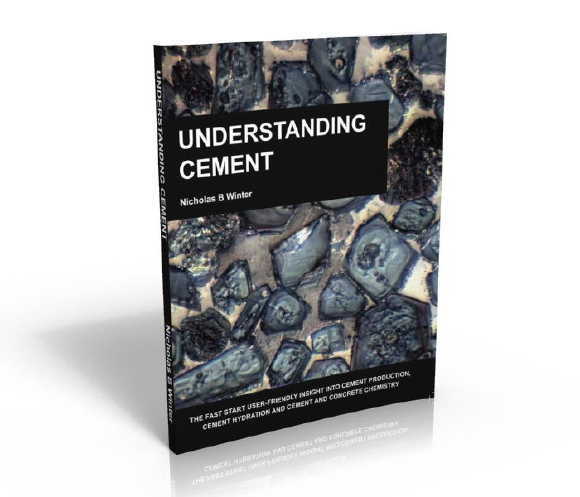
Articles like this one can provide a lot of useful material. However, reading an article or two is not really the best way to get a clear picture of a complex material like cement. To get a more complete and integrated understanding of cement and concrete, do have a look at the Understanding Cement book or ebook.
This easy-to-read and concise book contains much more detail on concrete chemistry and deleterious processes in concrete compared with the website.
For example, it has about two-and-a-half times as much on ASR, one-and-a-half times as much on sulfate attack and nearly three times as much on carbonation. It has sections on alkali-carbonate reaction, frost (freeze-thaw) damage, steel corrosion, leaching and efflorescence on masonry. It also has about four-and-a-half times as much on cement hydration (comparisons based on word count).
Click here for more information
Check the Article Directory for more articles on this or related topics
Recent Articles


-
Zero carbon cement by electrochemical synthesis
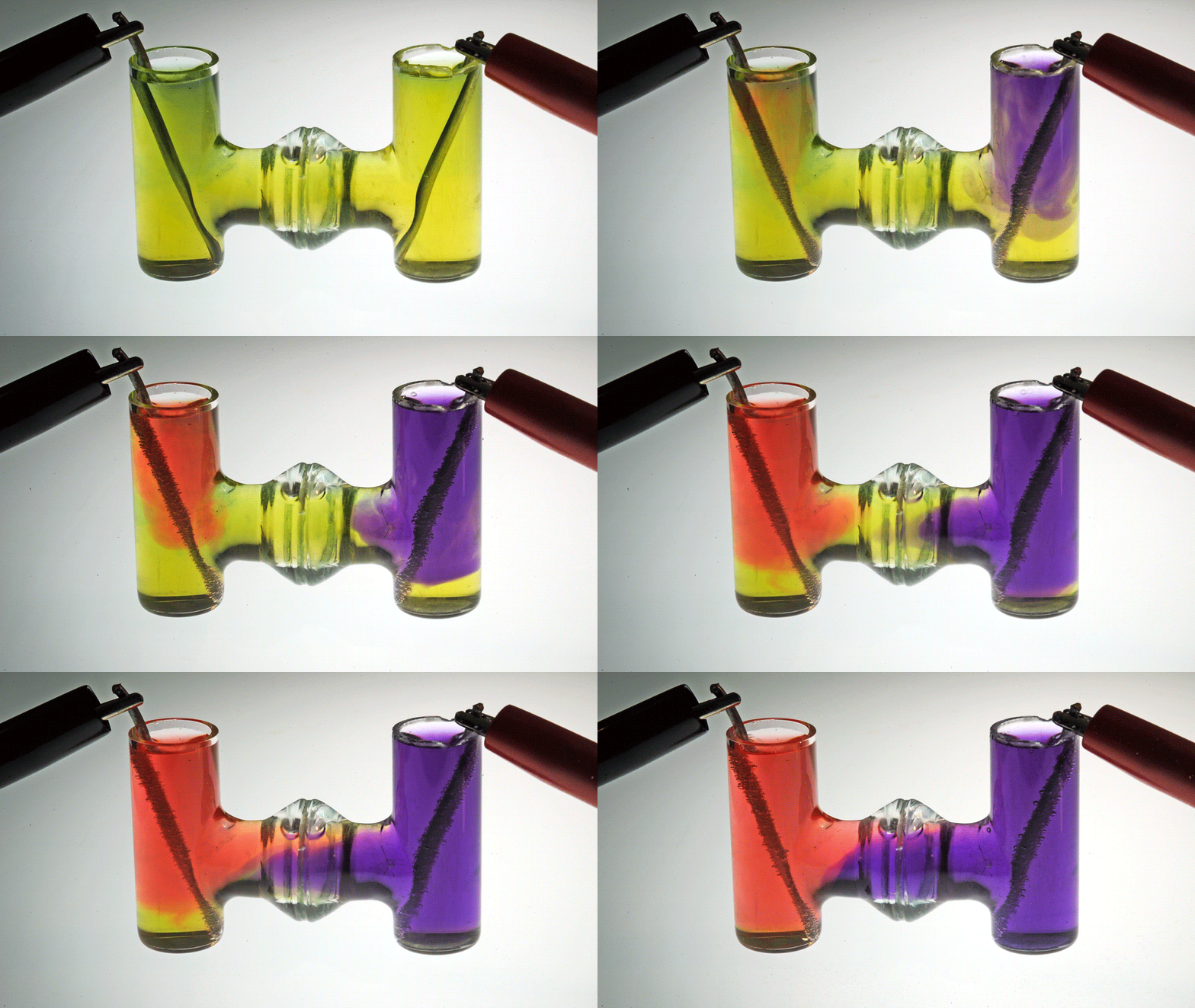 A pathway to zero carbon cement: Review, Ellis et al: Toward electrochemical synthesis of cement
 -
ASR Video 1
 An over-the-shoulder look at ASR in concrete as seen using the SEM.
 -
Book Review - Alkali-Aggregate Reaction in Concrete: A World Review
 The UC review of "Alkali-Aggregate Reaction in Concrete: A World Review" edited by Iam Sims and Alan Poole.
Almost everyone interested in cement is also concerned to at least some degree with concrete strength. This ebook describes ten cement-related characteristics of concrete that can potentially cause strengths to be lower than expected. Get the ebook FREE when you sign up to CEMBYTES, our Understanding Cement Newsletter - just click on the ebook image above.