Cement manufacturing -
brief description of a cement mill
Cement clinker is usually ground using a ball mill. This is essentially a large rotating drum containing grinding media - normally steel balls. As the drum rotates, the motion of the balls crushes the clinker. The drum rotates approximately once every couple of seconds.
The drum is generally divided into two or three chambers, with different size grinding media. As the clinker particles are ground down, smaller media are more efficient at reducing the particle size still further.
Grinding systems are either 'open circuit' or 'closed circuit.' In an open circuit system, the feed rate of incoming clinker is adjusted to achieve the desired fineness of the product. In a closed circuit system, coarse particles are separated from the finer product and returned for further grinding.
Gypsum is interground with the clinker in order to control the setting properties of the cement. Clinker grinding uses a lot of energy and the cement becomes hot - this can result in the gypsum becoming dehydrated, with potentially undesirable results - see the link at the bottom of this page for more information.
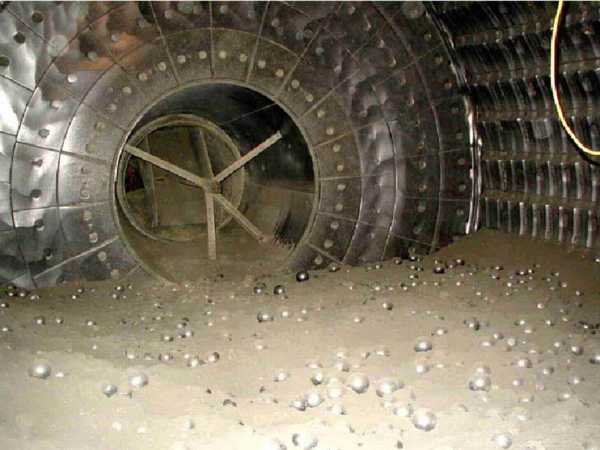 Inside a (stationary!) cement mill. The part-ground clinker and steel grinding media are clearly visible. (Picture courtesy Castle Cement).
Get a Better Understanding of Cement
Articles like this one can provide a lot of useful material. However, reading an article or two is perhaps not the best way to get a clear picture of a complex process like cement production. To get a more complete and integrated understanding of how cement is made, do have a look at the Understanding Cement book or ebook. This easy-to-read and concise book also contains much more detail on concrete chemistry and deleterious processes in concrete compared with the website.
Click here for more information
Check the Article Directory for more articles on this or related topics
Recent Articles


-
Zero carbon cement by electrochemical synthesis
 A pathway to zero carbon cement: Review, Ellis et al: Toward electrochemical synthesis of cement
 -
ASR Video 1
 An over-the-shoulder look at ASR in concrete as seen using the SEM.
 -
Book Review - Alkali-Aggregate Reaction in Concrete: A World Review
 The UC review of "Alkali-Aggregate Reaction in Concrete: A World Review" edited by Iam Sims and Alan Poole.
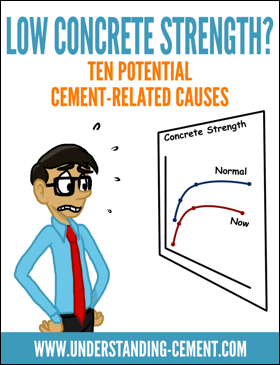
Almost everyone interested in cement is also concerned to at least some degree with concrete strength. This ebook describes ten cement-related characteristics of concrete that can potentially cause strengths to be lower than expected. Get the ebook FREE when you sign up to CEMBYTES, our Understanding Cement Newsletter - just click on the ebook image above.